You catch a glimpse of yourself in the mirror before leaving the house. The lighting is harsh. Your hair looks thinner than it used to, your ponytail feels smaller, and suddenly you find yourself adjusting your hairstyle to hide areas that seem less full. It is a quiet moment many people experience but rarely talk about. Over time, concerns about hair thickness and shedding can affect confidence, especially as we get older. The good news is that healthy hair is influenced by more than a single viral trend. And before you try the latest one week onion hair challenge, there is something important you should know that most social media posts leave out. Stay with me because the most valuable takeaway appears near the end of this article.
1-Week Challenge – Make Your Hair Grow Super Fast! | After doing this, your hair will never stop growing.
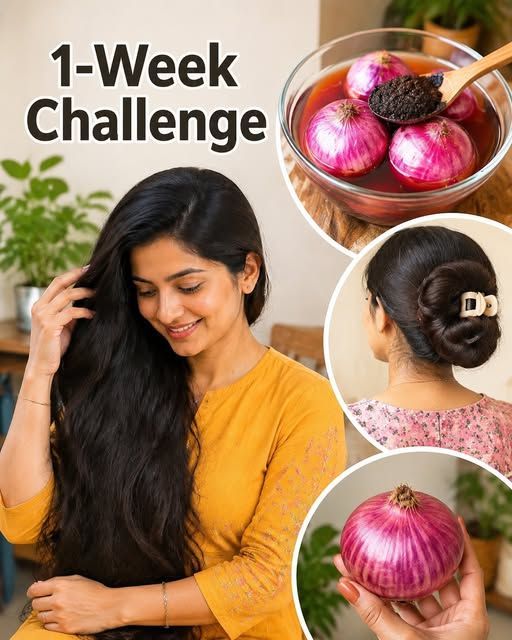
Why Are So Many People Talking About Onion Hair Challenges?
The internet is filled with videos showing people applying onion based mixtures to their scalp and sharing dramatic before and after photos. These posts often suggest that onion juice alone is responsible for healthier looking hair.
The appeal is understandable.
Onions are inexpensive, easy to find, and have been used in traditional beauty practices for generations. They contain sulfur compounds, antioxidants, and other naturally occurring nutrients that are involved in normal hair structure.
However, there is an important distinction.
Healthy hair growth is a complex biological process. No food, ingredient, or home remedy can guarantee rapid results in just a few days.
Research suggests that overall scalp health, nutrition, age, genetics, stress levels, sleep quality, and grooming habits all play important roles in how hair looks and feels.
The truth is surprisingly simple.
Many people focus on one ingredient while ignoring the daily habits that may have a much bigger influence over time.
What Onions Actually Contain
Onions provide several compounds that attract attention in beauty discussions:
- Sulfur containing compounds
- Antioxidants such as quercetin
- Vitamin C
- Small amounts of minerals
Sulfur is particularly interesting because hair contains keratin, a protein that naturally contains sulfur.
But that does not automatically mean applying onions to the scalp will dramatically increase hair growth.
The relationship is far more complicated.
What Science Says About Hair Growth

Hair grows in cycles.
Each strand moves through growth, resting, and shedding phases. This cycle can last months or even years.
Because of this natural process, meaningful changes usually take time.
Studies examining onion juice and hair have been limited in size and scope. While some small studies have explored possible benefits for certain hair conditions, researchers generally agree that more high quality evidence is needed.
That means social media claims often go far beyond what science currently supports.
Here is a useful comparison:
| Claim Often Seen Online | What Evidence Suggests |
|---|---|
| Hair will grow dramatically in one week | Hair growth is typically gradual and measured over months |
| Onion juice works for everyone | Individual responses vary significantly |
| One ingredient is enough | Hair health depends on multiple lifestyle factors |
| Results are guaranteed | No method can guarantee results for every person |
This is where many people become disappointed.
They try a trend for a few days, see no visible change, and assume nothing works.
In reality, hair health often reflects long term habits rather than short term experiments.
Common Daily Habits That May Affect Hair Appearance

Now we arrive at the part that many viral videos skip.
Several everyday habits may have a greater impact on hair appearance than any single homemade remedy.
Poor Nutrition
Hair is primarily made of protein.
When dietary intake becomes inadequate, the body may prioritize essential organs over hair production.
Nutrients commonly associated with normal hair health include:
- Protein
- Iron
- Zinc
- Vitamin D
- Vitamin B12
- Omega 3 fatty acids
A balanced eating pattern often supports overall wellness, including hair health.
Chronic Stress
Have you noticed increased shedding during stressful periods?
You are not imagining it.
Research has linked prolonged stress with changes in the normal hair growth cycle.
Stress management strategies may include:
- Walking outdoors
- Gentle exercise
- Meditation
- Spending time with family
- Maintaining regular sleep schedules
Over Styling
Many people unintentionally damage their hair through daily habits.
Examples include:
- Excessive heat styling
- Tight hairstyles
- Frequent chemical treatments
- Aggressive brushing
These practices can make hair appear thinner or more fragile over time.
But that is not all.
Even simple changes in grooming routines can sometimes improve the look and feel of hair.
If You Want to Try an Onion Hair Routine, Follow These Safety Tip

Some people still enjoy experimenting with traditional beauty practices.
If you decide to try an onion based scalp treatment, it is wise to approach it carefully.
Step 1: Perform a Patch Test
Apply a small amount to a discreet area of skin.
Wait 24 hours.
If irritation occurs, discontinue use.
Step 2: Use Fresh Ingredients
Prepare onion juice using clean utensils and fresh onions.
Avoid storing homemade mixtures for extended periods.
Step 3: Avoid Broken Skin
Never apply onion juice to irritated, inflamed, or damaged scalp areas.
Step 4: Limit Exposure Time
Leaving strong ingredients on the scalp for excessive periods may increase irritation.
Step 5: Wash Thoroughly
Use a gentle shampoo to remove residue and reduce lingering odor.
Remember:
Natural does not always mean risk free.
Sensitive skin reactions can occur with many homemade treatments.
The Real One Week Challenge That May Help Your Hair More

Instead of focusing exclusively on onions, consider trying a different one week challenge.
For seven days:
Day 1
Increase daily water intake.
Day 2
Add a protein rich food to each meal.
Day 3
Take a 20 minute walk.
Day 4
Avoid heat styling for one day.
Day 5
Go to bed 30 minutes earlier.
Day 6
Choose a nutrient rich meal containing vegetables and healthy fats.
Day 7
Practice relaxation for at least 15 minutes.
Will this transform your hair overnight?
Probably not.
But these habits support overall wellness and may contribute to healthier looking hair over time.
And unlike many viral challenges, they benefit much more than your scalp.
Foods Often Associated With Healthy Hair

Many readers are surprised to learn that the kitchen may play a larger role than the bathroom cabinet.
Foods commonly associated with hair supporting nutrients include:
| Food | Key Nutrients |
|---|---|
| Eggs | Protein, biotin |
| Salmon | Omega 3 fats, protein |
| Greek yogurt | Protein, vitamin B12 |
| Spinach | Iron, folate |
| Nuts | Healthy fats, zinc |
| Beans | Protein, iron |
| Berries | Antioxidants, vitamin C |
The goal is not perfection.
Consistency matters far more than occasional healthy meals.
This is one reason older adults may benefit from paying closer attention to nutrient intake as dietary needs change with age.
When Should You Talk With a Healthcare Professional?

Hair changes can occur for many reasons.
Sometimes they are simply part of normal aging.
In other situations, they may be associated with nutritional deficiencies, medications, hormonal changes, or other health factors.
Consider seeking professional advice if you notice:
- Sudden or severe hair shedding
- Rapid changes in hair texture
- Scalp discomfort
- Patchy hair loss
- Persistent concerns affecting quality of life
A qualified healthcare professional can help identify possible contributing factors and recommend appropriate next steps.
This approach is often more valuable than chasing every new social media trend.
The Surprising Lesson Most People Miss
The most important lesson is not really about onions.
It is about consistency.
The people who often maintain healthy looking hair over the years usually focus on habits rather than miracles.
They nourish their bodies.
They manage stress.
They protect their hair from unnecessary damage.
They understand that meaningful changes rarely happen in seven days.
And perhaps most importantly, they avoid falling for promises that sound too good to be true.
That perspective may be the real secret behind healthier looking hair.

Conclusion
The popular one week onion hair challenge continues to attract attention because it is simple, affordable, and rooted in traditional practices. While onions contain compounds that may support overall scalp care, current evidence does not support claims of dramatic hair growth in just a few days.
A more balanced approach focuses on nutrition, stress management, gentle hair care, adequate sleep, and realistic expectations.
Small daily habits may not create viral before and after photos, but they often provide the strongest foundation for healthy looking hair over time.
Frequently Asked Questions
Does onion juice make hair grow faster?
There is currently limited scientific evidence showing that onion juice dramatically speeds up hair growth. Individual experiences vary, and healthy hair growth depends on many factors.
How long does it usually take to notice changes in hair?
Hair grows gradually. Visible changes in appearance often take weeks or months rather than days.
Is onion juice safe for everyone?
Not necessarily. Some individuals may experience skin irritation or sensitivity. A patch test is recommended before applying any homemade scalp treatment.
Can diet affect hair appearance?
Yes. Adequate intake of protein, vitamins, minerals, and healthy fats contributes to overall wellness and may support normal hair health.
Disclaimer
This article is for educational and informational purposes only and is not intended as medical advice, diagnosis, or treatment. Always consult a qualified healthcare professional regarding personal health concerns or significant changes in hair or scalp health.