Many people deal with occasional digestive discomfort, such as feeling bloated or sluggish after meals. This can affect daily energy levels and overall comfort, making simple tasks feel more challenging. A refreshing smoothie packed with fiber-rich fruits and supportive ingredients offers a tasty way to nourish your gut as part of a balanced lifestyle.

In this guide, you’ll discover a simple recipe inspired by vibrant tropical flavors that many enjoy for promoting better digestive wellness. But that’s just the beginning—keep reading to uncover practical tips, science-backed insights, and ways to make this part of your routine for lasting benefits.
Why Smoothies Can Play a Role in Daily Digestive Support
Digestive health is foundational to feeling your best every day. The gut processes everything we eat, and when things slow down, it can lead to that heavy, uncomfortable feeling. Incorporating nutrient-dense foods like fruits high in fiber and natural enzymes can help support the body’s natural processes.
Research suggests that increasing dietary fiber intake from whole foods may contribute to more regular bowel movements and improved gut comfort. Ingredients like mango, pineapple, and banana are popular choices because they provide both soluble and insoluble fiber, along with hydration from their natural water content.
But here’s what makes this approach appealing: it’s easy, delicious, and fits into busy mornings without requiring complicated changes.
The Power of Tropical Ingredients for Gut-Friendly Smoothies
Tropical fruits bring more than great taste to the table. Mango offers vitamins and fiber that support overall wellness. Pineapple contains bromelain, an enzyme that helps break down proteins, potentially easing digestion. Banana adds potassium and gentle fiber for smoother consistency, while a touch of ginger brings a warming, soothing element often associated with digestive ease.
Here’s a quick comparison of key ingredients and their common benefits:
- Mango: Rich in fiber and antioxidants; supports hydration and natural sweetness.
- Pineapple: Provides enzymes and vitamin C; adds bright flavor and potential digestive support.
- Banana: Creamy texture with prebiotic-like qualities that may feed beneficial gut bacteria.
- Ginger: Known for its soothing properties; many use it to promote comfort after meals.
- Chia seeds or flaxseeds (optional): Boost fiber content significantly for added regularity support.
These components work together in a smoothie to deliver hydration and nutrients in an enjoyable form.
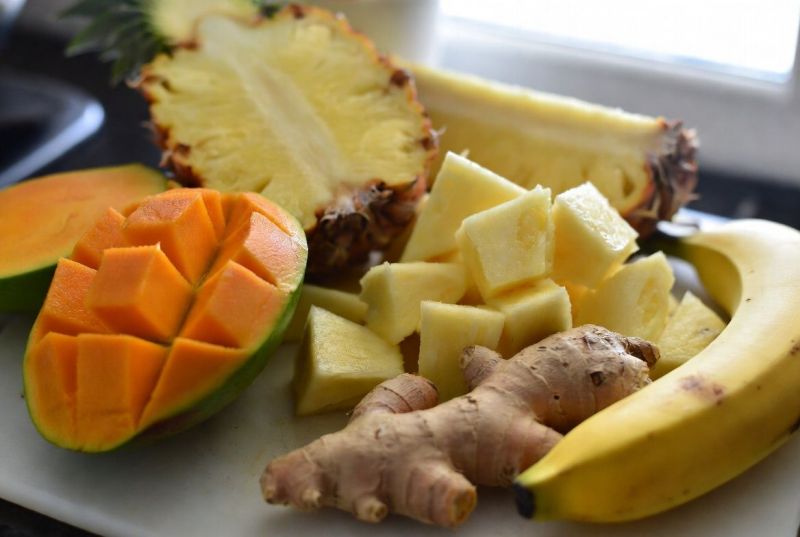
Step-by-Step Recipe: Tropical Mango Pineapple Digestive Smoothie
This recipe makes one generous serving (about 16-20 oz) and takes just 5 minutes to prepare. It’s naturally sweet, creamy, and vibrant yellow-orange—perfect for starting your day.
Ingredients:
- 1 cup frozen mango chunks
- 1 cup frozen pineapple chunks
- 1 ripe banana (fresh or frozen for extra creaminess)
- 1-inch piece of fresh ginger, peeled and roughly chopped
- 1 cup unsweetened almond milk, coconut water, or your preferred liquid
- 1 tablespoon chia seeds or ground flaxseeds (for extra fiber)
- Optional: A handful of spinach for added greens without changing the flavor much
- Optional: Juice of half a lime for brightness
Instructions:
- Add all ingredients to a high-speed blender.
- Blend on high until completely smooth, about 45-60 seconds. Add more liquid if needed for your preferred thickness.
- Pour into a glass and enjoy immediately for the best texture and freshness.
- For meal prep, portion ingredients into freezer bags ahead of time (minus the liquid) so you can blend quickly in the morning.
This smoothie delivers a satisfying blend of flavors—sweet mango and pineapple balanced by zesty ginger. Many people report feeling lighter and more energized after making it a habit.
Additional Tips to Maximize Digestive Wellness with Smoothies
Creating the perfect smoothie is about more than just the recipe. Here are practical ways to enhance results:
- Timing matters: Enjoy this in the morning on an empty stomach or as a mid-afternoon snack when digestion might need extra support.
- Stay hydrated: Pair your smoothie with plenty of water throughout the day, as fiber works best with adequate fluids.
- Customize for your needs: If you prefer thicker texture, add Greek yogurt or a scoop of protein powder. For more greens, spinach or kale blend seamlessly.
- Listen to your body: Start with smaller portions if you’re new to high-fiber foods to avoid temporary adjustment.
Pro Tip: But that’s not all—experiment with add-ins like kiwi, which some studies link to improved bowel regularity, or a spoonful of plain yogurt for probiotics.
Lifestyle Habits That Complement Your Smoothie Routine
Smoothies are most effective as part of a broader approach to wellness. Regular physical activity, such as walking after meals, encourages gentle movement in the digestive tract. Stress management techniques like deep breathing can also play a supportive role, since the gut and brain are closely connected.
Consider tracking how you feel after incorporating this recipe for a week or two. Many notice improvements in comfort and energy when combining it with consistent sleep and a varied diet rich in whole foods.
Common Mistakes to Avoid When Making Gut-Friendly Smoothies
Even simple recipes can go wrong. Avoid overloading with too many sweet fruits without balancing fiber, which might lead to blood sugar spikes. Always use frozen fruit for creaminess without needing extra ice that dilutes flavor.
Another pitfall: Skipping variety. Rotate ingredients weekly to ensure a broad range of nutrients for your microbiome.
More Variations to Keep Things Interesting
Once you master the base recipe, try these twists:
- Berry Boost Version: Swap half the mango for mixed berries for extra antioxidants.
- Green Power Smoothie: Add a cup of spinach and a tablespoon of hemp seeds.
- Protein-Packed Option: Include a scoop of unflavored protein powder or nut butter for staying power.
These variations prevent boredom while maintaining the focus on digestive support.
What Science Says About Fiber and Digestive Health
Studies consistently highlight the importance of dietary fiber for gut regularity. The American Gastroenterological Association and similar bodies recommend gradually increasing fiber intake from sources like fruits and seeds.
While individual results vary, many find that consistent intake of hydrating, fiber-rich foods like those in this smoothie contributes to feeling lighter and more comfortable over time.

Actionable 7-Day Plan to Incorporate This Smoothie
Day 1-3: Make the base recipe daily for breakfast.
Day 4-5: Try one variation and note energy levels.
Day 6-7: Combine with a short walk and extra water intake.
This simple plan helps build sustainable habits without overwhelm.
FAQ
How often should I drink this smoothie for best results?
Many people enjoy it 3-5 times per week as part of a balanced diet. Consistency with overall lifestyle choices matters more than daily use.
Can I prepare it in advance?
Yes—blend and store in the fridge for up to 24 hours, or freeze ingredients in bags for quick assembly.
Is this suitable for everyone?
It’s generally well-tolerated, but consult a healthcare professional if you have specific digestive conditions or dietary restrictions.
What if I don’t like ginger?
Reduce the amount or omit it—the mango and pineapple still provide excellent flavor and nutrients.
Are there any side effects from increasing fiber?
Some experience mild temporary bloating when first increasing fiber. Start slow and drink plenty of water.
Final Thoughts on Supporting Your Digestive Health Naturally
This tropical mango pineapple smoothie offers a delicious, practical way to nourish your body and promote regularity as part of healthy habits. By focusing on whole foods and simple routines, you can take positive steps toward feeling your best every day.
Remember, small consistent choices often lead to the biggest improvements in how you feel.
Disclaimer: This article is for informational purposes only and is not intended as medical advice. Results vary by individual. Consult with a qualified healthcare professional before making significant changes to your diet, especially if you have existing health conditions or concerns. Always prioritize professional medical guidance for digestive issues.